
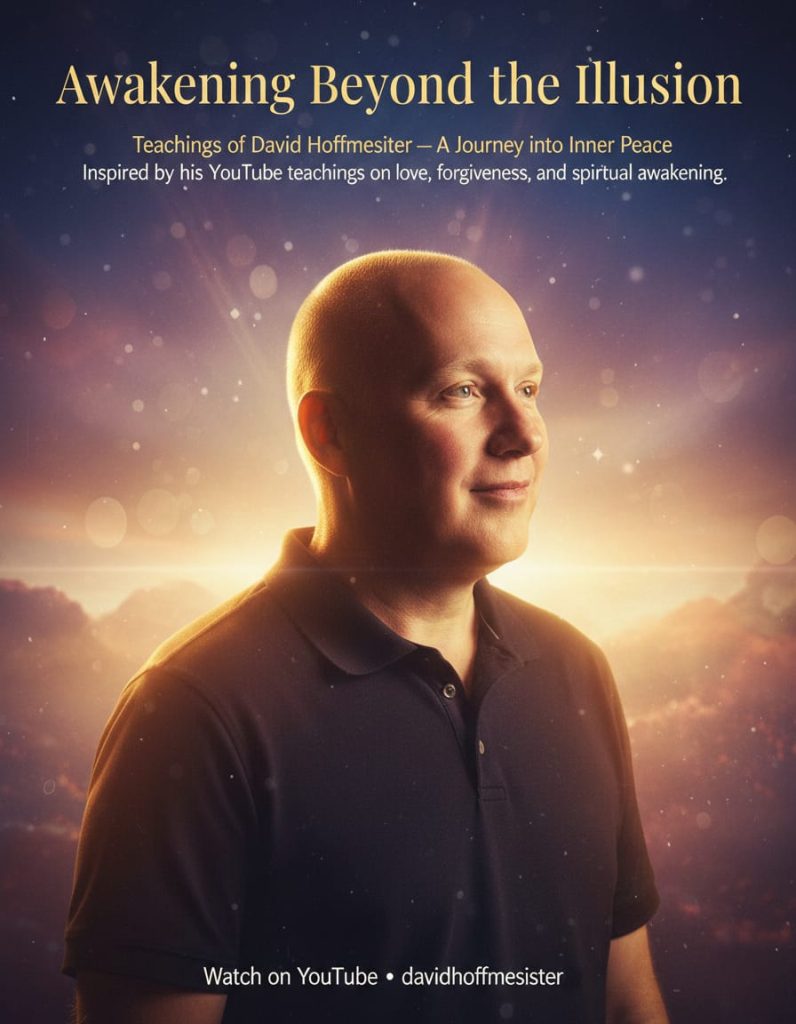
Modern spiritual exploration often revolves around emotional healing, awareness, and inner transformation. In that context, David Hoffmeister Wikipedia serves as an entry point into the teachings of a spiritual teacher who emphasizes mind training, forgiveness, and perception correction as the pathway to lasting peace.
Unlike philosophies that focus on external rituals or symbolic practices, Hoffmeister’s teachings center on the internal mechanism of thought. He proposes that the mind, when properly understood and trained, becomes the gateway to freedom rather than the source of suffering.
Introduction
Many individuals attempt to solve emotional discomfort by changing circumstances—switching careers, ending relationships, relocating, or pursuing material success. While external changes can provide temporary relief, they rarely address the root cause of internal unrest.
David Hoffmeister teaches that the root of suffering lies in interpretation. When the mind misinterprets events through fear-based assumptions, emotional turbulence follows. When perception shifts toward clarity, peace naturally emerges.
This is not motivational rhetoric. It is a structured psychological-spiritual framework built on awareness, forgiveness, and present-moment discipline.
Mind Training as the Core Practice
At the center of Hoffmeister’s approach is mind training. The goal is not to suppress thoughts but to observe and reinterpret them.
Mind training involves:
- Identifying recurring thought patterns
- Recognizing fear-based assumptions
- Questioning automatic conclusions
- Choosing a peaceful interpretation
For example, if someone does not respond to a message, the ego may interpret it as rejection. Mind training invites a pause: Is that interpretation accurate? Is there another explanation?
This simple shift prevents emotional escalation.
Over time, this discipline weakens reactive patterns and strengthens conscious response.
Forgiveness as Mental Liberation
Forgiveness, in Hoffmeister’s framework, is not a moral obligation. It is a mental strategy for liberation.
When individuals hold onto resentment, they reinforce the belief that external events control internal peace. Forgiveness interrupts that belief.
It means releasing the interpretation that caused emotional disturbance.
This practice produces measurable psychological effects:
- Decreased rumination
- Lower stress levels
- Improved emotional stability
- Enhanced clarity
Forgiveness is repeated as often as necessary. It is not a one-time event but an ongoing recalibration.
The Illusion of External Control
A significant component of Hoffmeister’s message is the recognition that external control is limited. Attempts to control outcomes often increase anxiety.
True stability arises from internal alignment rather than environmental management.
When individuals stop trying to manipulate circumstances and instead focus on adjusting perception, mental pressure decreases.
This does not imply passivity. It implies clarity-driven action rather than fear-driven reaction.
Present-Moment Awareness and Cognitive Stability
The present moment is the only space where clarity exists.
Anxiety projects imagined futures.
Regret replays fixed past events.
Neither can be altered directly.
By returning attention to the present—through breathing awareness, sensory grounding, or mental observation—individuals interrupt unnecessary emotional escalation.
Present-moment awareness stabilizes the nervous system.
With practice, this becomes a default orientation rather than an effortful exercise.
Overcoming Ego-Based Resistance
Spiritual growth often triggers internal resistance. The ego resists surrendering familiar patterns, even if those patterns create discomfort.
Common obstacles include:
- Doubting the simplicity of the method
- Seeking dramatic transformation
- Over-intellectualizing spiritual principles
- Comparing progress to others
Hoffmeister encourages simplicity and consistency.
Progress is subtle. Emotional triggers that once created intense reactions gradually lose power. This is evidence of transformation.
Emotional Regulation Through Perception Shift
Emotional regulation becomes easier when individuals recognize that thoughts generate feelings.
By intervening at the level of thought, emotional intensity decreases.
For instance:
- Instead of interpreting disagreement as hostility, view it as perspective diversity.
- Instead of interpreting delay as failure, view it as timing adjustment.
These reinterpretations alter emotional output immediately.
This is not denial; it is reframing based on awareness.
Over time, emotional volatility reduces significantly.
Integration into Daily Life
Hoffmeister’s teachings are designed for real-world integration.
In professional environments:
- Pause before responding to criticism.
- Question reactive thoughts.
In relationships:
- Release grievances quickly.
- Communicate from clarity rather than defensiveness.
In personal development:
- Reflect daily without self-judgment.
- Observe fear patterns without reinforcing them.
Spirituality becomes a daily operating system rather than a weekend practice.
Long-Term Psychological and Spiritual Impact
With consistent practice, individuals often experience:
- Increased resilience during uncertainty
- Greater emotional balance
- Enhanced focus
- Improved communication
- Stronger internal confidence
Peace becomes stable rather than conditional.
Instead of being dependent on favorable outcomes, stability remains intact regardless of external fluctuation.
This internal steadiness is the true measure of growth.
The Practical Nature of Awakening
Awakening, as presented in Hoffmeister’s teachings, is not a mystical event. It is a gradual correction of perception.
Each time an individual chooses clarity over fear, awakening strengthens.
Each time forgiveness replaces grievance, freedom expands.
Each time awareness interrupts reactivity, peace deepens.
Spiritual maturity develops incrementally.
Conclusion
The insights connected to David Hoffmeister Wikipedia illustrate a structured path toward mind training, perception correction, and sustainable inner peace. Through disciplined awareness, repeated forgiveness, and present-moment focus, individuals can transform their emotional landscape from instability to clarity.
Spiritual growth, in this model, is not about dramatic experiences—it is about consistent mental refinement. When perception changes, life changes.
Frequently Asked Questions (FAQ)
Who is David Hoffmeister?
David Hoffmeister is a spiritual teacher known for emphasizing perception correction, forgiveness, and awareness inspired by A Course in Miracles.
What is mind training?
Mind training is the disciplined observation and reinterpretation of thoughts to reduce fear-based reactions.
Is forgiveness psychological or spiritual?
It functions as both. It reduces emotional stress while supporting spiritual clarity.
How long does transformation take?
Progress depends on consistency. Small daily shifts accumulate into lasting change.
Can these teachings be applied in professional life?
Yes. The principles enhance clarity, emotional regulation, and decision-making.
